What Managed Paralegal Support Actually Delivers: A Day in the Life of a Toorey-Powered Firm
Managed paralegal support is one of those phrases that sounds compelling in a sales deck but can be hard to picture in practice. What does it actually look like on a Tuesday morning when three cases need to move forward, a client has not responded to a document request in two weeks, and an RFE just arrived on a case that was supposed to be straightforward?
The answer to that question is where the real value of managed paralegal support either exists or does not. Not in the feature description. In the daily operational reality.
This piece walks through what a typical day looks like at an immigration firm running on Toorey's managed paralegal support, case by case, task by task. It is not a theoretical description. It is what the workflow actually produces when it is working as designed.
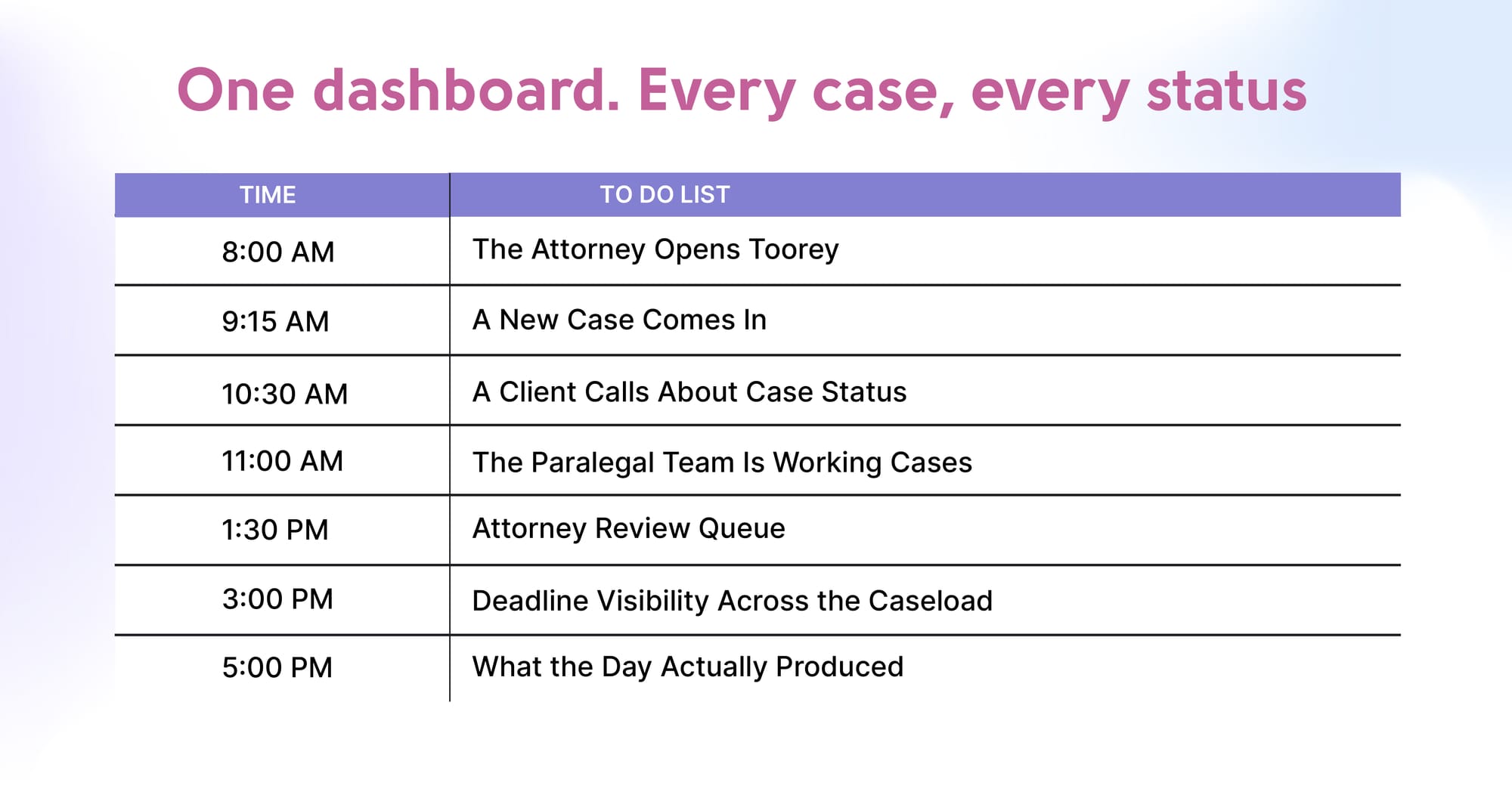
8:00 AM: The Attorney Opens Toorey
The attorney arrives and opens Toorey. The dashboard shows the current status of every active case: documents received overnight, tasks completed by the paralegal team, deadlines surfacing this week, and cases flagged for attorney attention.
Three things are waiting for review this morning.
An H-1B support letter draft, generated by Toorey's AI and reviewed by the paralegal for completeness, is ready for attorney approval. The draft incorporates the employer's business description, the proffered position details, and the specialty occupation argument structured around the role's requirements. A note from the paralegal flags one area where the employer's job description uses language that may not map cleanly to the specialty occupation standard, and suggests language the attorney may want to consider.
A green card case shows that the beneficiary completed their intake questionnaire last night. The paralegal has reviewed the responses, identified two missing documents, sent a structured follow-up request to the beneficiary with specific instructions and a deadline, and updated the case status accordingly. The attorney does not need to do anything on this case today. It is moving.
An RFE response on an L-1B case has been partially assembled. The paralegal has gathered the supporting documentation listed in the response plan the attorney approved last week, organized it according to the cover letter structure, and flagged two exhibits that still need attorney-drafted explanatory language. The case is on track for its response deadline, which is 23 days out.
The attorney reviews the support letter, refines the specialty occupation argument in the flagged section, approves the document, and it is ready to include in the filing packet. Total time: 18 minutes.
9:15 AM: A New Case Comes In
A corporate client emails to say they need an H-1B transfer petition for a software engineer joining from another employer. The attorney creates the case in Toorey, assigns it to the paralegal team, and attaches the employer's initial information.
Within the hour, the paralegal has sent the employer a structured intake questionnaire and the beneficiary a document checklist through Toorey's client portal. Both are configured specifically for an H-1B transfer: the right questions, the right document categories, nothing missing and nothing unnecessary.
The attorney does not send a single email to gather intake information. The system handles it. The case is now active and the intake process is running.
10:30 AM: A Client Calls About Case Status
A beneficiary calls to ask where their O-1 petition stands. In most firms, this call goes to the attorney or a paralegal who then has to look up the case, piece together the current status, and call or email back.
In Toorey, the client has access to a live case portal where status updates are reflected in real time as work happens. The paralegal updates the case record as they work, which means the beneficiary's portal shows current status without anyone having to manually prepare an update.
The attorney takes the call, opens the case in Toorey while the client is on the line, and can see immediately that the petition is in final assembly, two exhibits are being formatted, and the expected filing date is Thursday. The call takes four minutes instead of fifteen.
11:00 AM: The Paralegal Team Is Working Cases
While the attorney handles legal work and client calls, the Toorey paralegal team is working through the day's task queue.
A family-based green card case needs the I-485 prepared. The paralegal opens the case in Toorey, where the beneficiary's intake data has already populated the form fields. They review each section against the supporting documents, correct two entries where the beneficiary's questionnaire responses need clarification, flag those for a follow-up to the beneficiary through the platform, and move the form to the attorney review queue with a note explaining the two flagged items.
An H-1B extension case has a receipt notice that arrived in the mail. The paralegal logs the receipt number to the case record in Toorey, updates the case status, and sends an automated status update to the client through the portal. The client knows their receipt notice has been received and their case is progressing. The attorney is not involved in any of this. It happens, it is logged, and it is visible.
A PERM case has a document deadline approaching in four days. Toorey surfaced this deadline three weeks ago with an automated alert. The paralegal has been managing the document collection since then and has everything except one item from the employer's HR department.
They send a final follow-up through the platform today, escalate to the attorney with a note that the item is still outstanding, and the attorney makes a direct call to the HR contact to expedite.
1:30 PM: Attorney Review Queue
After lunch, the attorney works through the tasks the paralegal team has escalated for legal review.
The I-485 that was completed this morning is in the queue. The attorney reviews the two flagged items, reviews the rest of the form, approves it, and notes in the case record that it is ready for the filing packet. Ten minutes.
An employer letter for an O-1 petition needs a final review before it goes to the employer for signature. The paralegal drafted it using Toorey's AI tools and structured it around the evidentiary criteria the O-1 requires. The attorney reads it, adds two sentences strengthening the description of the beneficiary's contributions to the field, and approves it for sending. Twelve minutes.
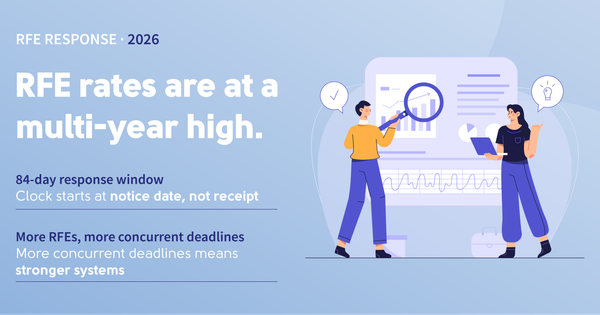
A new RFE has arrived on an H-1B case. The attorney reads it, identifies the issues, records a response strategy in the case record, and assigns the document gathering tasks to the paralegal team with specific instructions. The paralegal team will begin assembling the supporting documentation today. The attorney will draft the legal argument section next week when the documents are in hand.
3:00 PM: Deadline Visibility Across the Caseload
The attorney pulls up Toorey's deadline view to check the week ahead. Every active case with a filing deadline, response deadline, or internal milestone due in the next ten days is visible in one screen, with current status and owner for each open action.
Three cases have filings due this week. Two are in final assembly and on track. One has a document that has not arrived from the employer yet. The paralegal has sent two reminders. The attorney sends a direct message to the employer contact.
Two RFE responses are due within 30 days. Both are in progress with clear task ownership and current status visible. Neither requires attorney intervention today.
One green card priority date is advancing next month and the client has not yet completed the adjustment of status intake questionnaire they were sent two weeks ago. The paralegal has sent two reminders. The attorney makes a note to call the client tomorrow if the questionnaire is still incomplete.
This review takes eight minutes and gives the attorney complete visibility into every time-sensitive matter in the practice. Without Toorey, the same review would require asking three people and checking two systems.
5:00 PM: What the Day Actually Produced
By the end of a typical day, the attorney has approved three documents, resolved one deadline escalation, reviewed one new RFE and set the response strategy, handled several client calls with full case visibility, and completed the legal analysis and judgment work that required their expertise.
The paralegal team has prepared two forms, gathered supporting documents on four active cases, sent structured follow-up requests to three clients, logged two receipt notices, updated case statuses across the caseload, and escalated three items for attorney review with full context and notes.
Nothing moved without attorney oversight. Nothing fell through the gap between what the paralegal team handled and what the attorney needed to know. Every action is logged in the case record with a timestamp and owner, visible to anyone with authorized access.
This is what managed paralegal support looks like when it is built into the platform rather than attached to it loosely. The paralegals are not working in a separate system that feeds information back through a handoff. They are working in the same environment as the attorneys, on the same case records, with the same visibility. The work moves because the system is designed to move it, and the attorney is in control because the workflow is designed to keep them in control.
What This Means for Case Volume
The day described above involves an attorney managing a genuinely high-volume caseload with a level of oversight and quality control that would be difficult to maintain without this kind of integrated support.
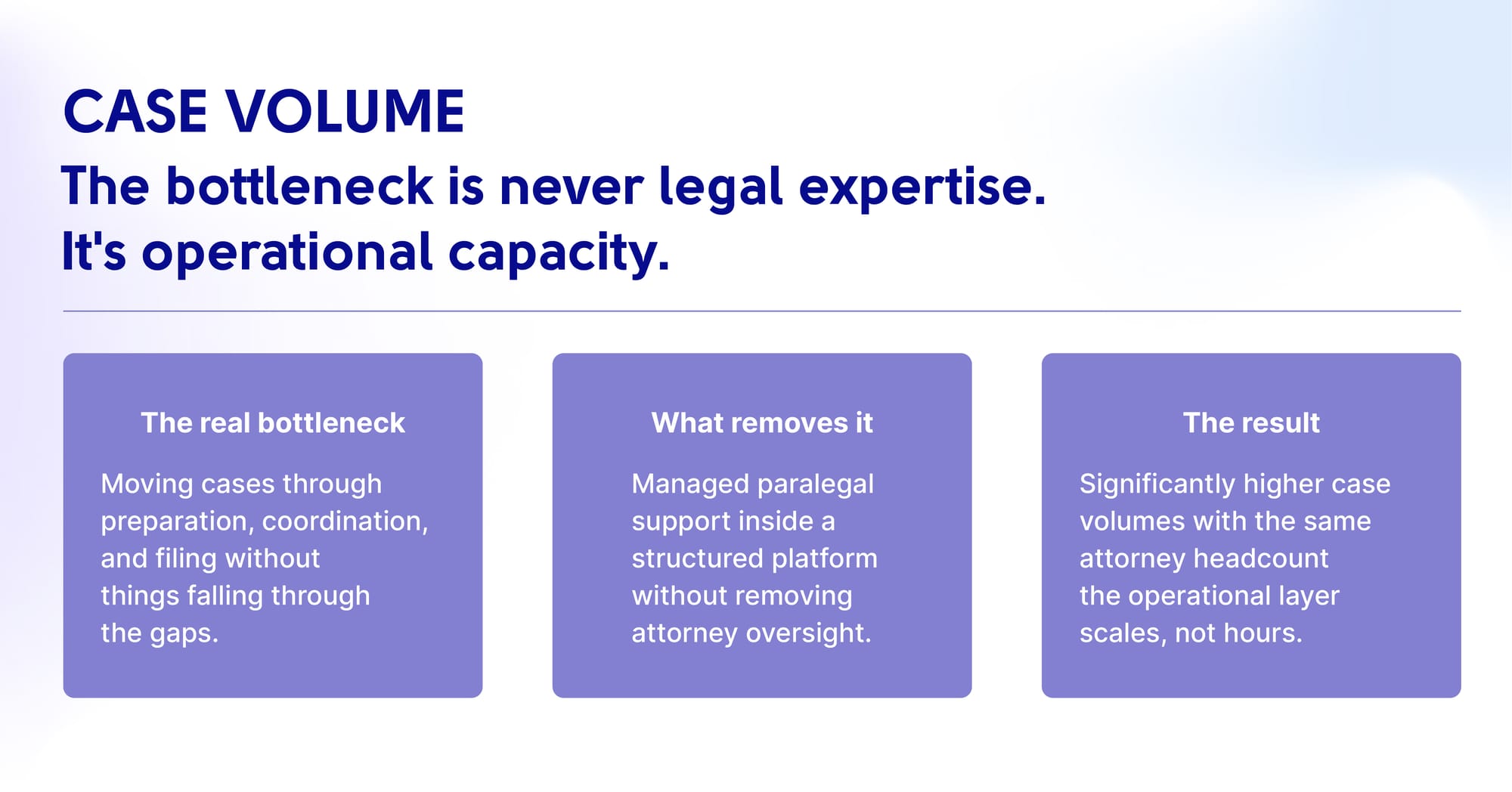
The bottleneck in immigration practice is almost never legal expertise. It is operational capacity: the bandwidth to move cases through the preparation, coordination, and filing process systematically without things falling through the gaps. Managed paralegal support inside a structured platform removes that bottleneck without removing attorney oversight.
Firms using Toorey's managed paralegal support report being able to handle significantly higher case volumes than they could with the same attorney headcount running conventional operations. The economics change because the operational layer scales through the platform and the paralegal service rather than requiring proportional growth in attorney hours.
The Difference That Integration Makes
The scenario above is only possible because Toorey's managed paralegals work inside the platform, not alongside it. When the paralegal completes a form, it is in the case record. When the attorney approves a document, the paralegal team can see it. When a deadline is approaching, both the attorney and the paralegal team see it at the same time, and the system owns the responsibility for surfacing it.
There are no handoffs between systems. No status updates that require someone to send an email. No version control issues with documents. No ambiguity about what has happened on a case and what still needs to happen.
This is the operational model that makes the kind of day described above possible, not just occasionally but consistently, across every case in the practice.
See how Toorey's managed paralegal support works inside a real immigration practice. Book a demo at toorey.com.